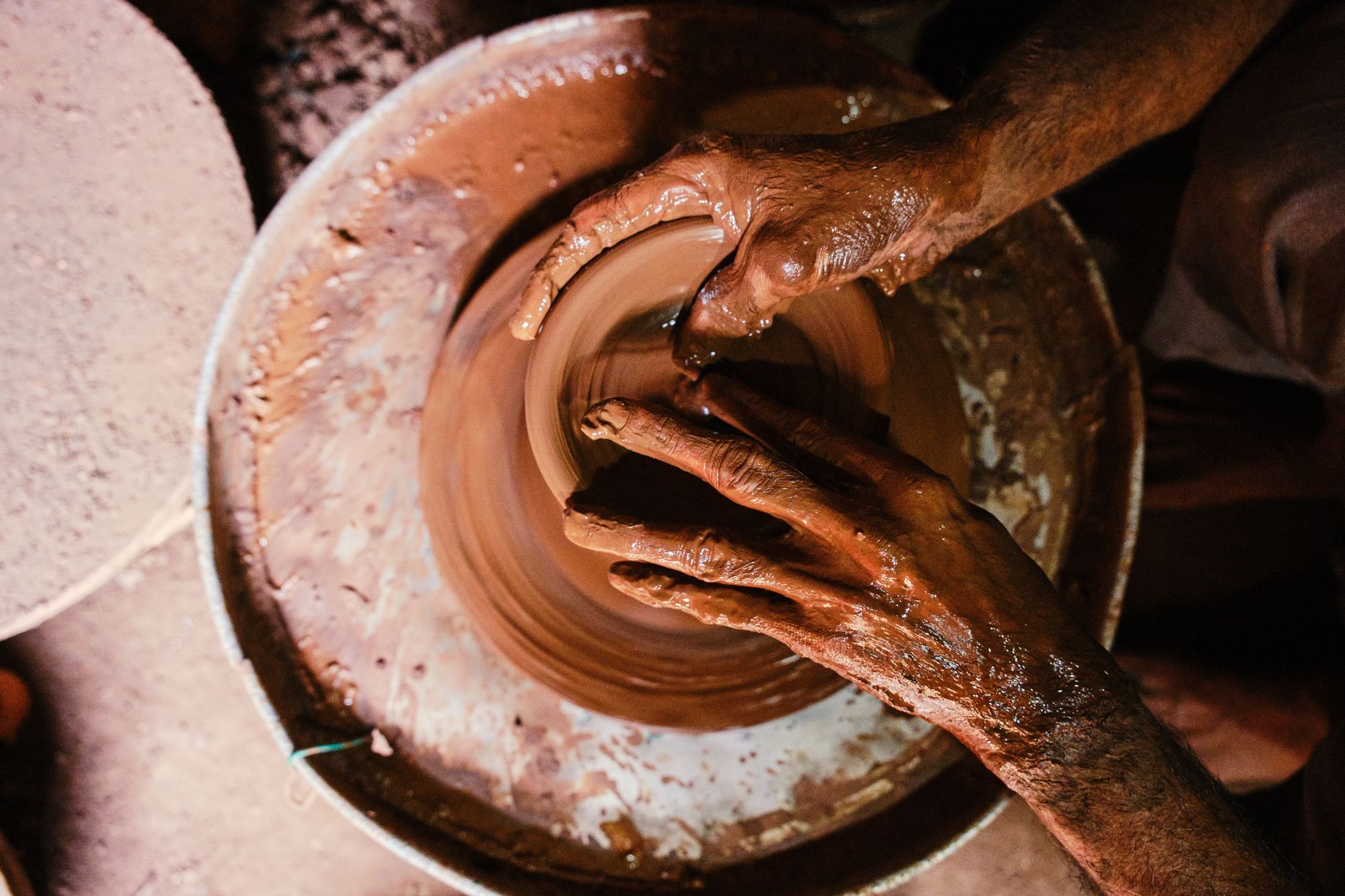
It happens every day. A potter pulls a bit of clay from a block of clay. They size, wet, and knead it for the creation they have in mind. When all is ready, they throw it on the wheel and begin to shape it. Will it be a pot, a vase, a coffee cup, a pitcher, a plate? What the clay becomes is up to the potter.
The Bible uses that same scene to help us understand God’s sovereignty. “What should we say then? Is there injustice with God? Absolutely not! For he tells Moses, I will show mercy to whom I will show mercy, and I will have compassion on whom I will have compassion. So then, it does not depend on human will or effort but on God who shows mercy. For the Scripture tells Pharaoh, I raised you up for this reason so that I may display my power in you and that my name may be proclaimed in the whole earth. So then, he has mercy on whom he wants to have mercy and he hardens whom he wants to harden. You will say to me, therefore, “Why then does he still find fault? For who resists his will?” On the contrary, who are you, a human being, to talk back to God? Will what is formed say to the one who formed it, “Why did you make me like this?” Or has the potter no right over the clay, to make from the same lump one piece of pottery for honor and another for dishonor? And what if God, wanting to display his wrath and to make his power known, endured with much patience objects of wrath prepared for destruction? And what if he did this to make known the riches of his glory on objects of mercy that he prepared beforehand for glory—on us, the ones he also called, not only from the Jews but also from the Gentiles?” (Romans 9:14–24, CSB)
This is always a difficult topic for a short-form devotional. God’s sovereignty is total. We are who God made us to be. God chose you to accept Christ and be grafted into the family of faith. He shaped our lives in ways we can’t see. And yet, we exercise choice. God is sovereign, but in His sovereignty has granted some degree of choice. We chose Christ, but God chose us first.
Yes, sometimes God hardens someone’s heart and makes it virtually impossible for them to find His mercy. However, I find that is more the exception rather than the norm. Most often we harden our own hearts by rejecting God’s rule, mercy, and word. Jesus, in response to why people don’t “get it,” said, “Isaiah’s prophecy is fulfilled in them, which says: You will listen and listen, but never understand; you will look and look, but never perceive. For this people’s heart has grown callous; their ears are hard of hearing, and they have shut their eyes; otherwise they might see with their eyes, and hear with their ears, and understand with their hearts, and turn back— and I would heal them.” (Matthew 13:14–15, CSB)
Romans applied. The concept is straight, but the application is where we can get wobbly. The problem is that we have all questioned God’s potter’s wheel design for our lives. That the basis for all sin. God wants us to be a coffee cup, but we want to be a vase. That somehow, we as the clay in God’s hand know better than He who we are. Pride, jealousy, hatred, envy, gossip, backbiting, manipulation, self-centeredness, unforgiveness (and many more) all come from us saying no to God. We want our will. We want to be like someone else. We want what someone else has.
But we are not the only ones trying to supplant God at the potter’s wheel of our lives. There are many others who would gladly step in to mold our lives as they see fit. The modern term is influencers. The Bible breaks those others into three categories: the flesh (ourselves), the world (others), and the devil (spiritual forces at war with God). Our wobblyness comes from those areas we allow any of those three to mold us instead of God’s sovereign hand.
We must accept God’s sovereignty over our lives in all things. That doesn’t mean that we fatalistically accept everything that comes our way as God’s perfect will. Jesus said that in this world there will be trouble. We are impacted by our sin and the sin of others. The Bible invites us to “cast our cares on Him for He cares for us.” But what we must do is seek His kingdom in our lives every day. How? By implanting His word in our hearts, praying about the choices and circumstances of our day, and trusting always in His mercy and love.

- Romans Applied – God’s Patience - September 30, 2026
- Romans Applied – Dealing With Differences - September 23, 2026
- Romans Applied – Debt of Love - September 16, 2026