In Old Testament Hebrew, there are seven words used to describe worship. These words are, in essence, modes of worship. They define certain aspects of worship and remind us that worship isn’t restrictive, but expressive.
You probably know the first word in our list – Halal. Its meaning is to praise or boast. To lift up. And, it is the root word of Hallelujah. Literally, Praise God. This word transcends thousands of years. Right now, one of the top worship songs is Let It Be a Hallelujah by Lauren Daigle. https://www.youtube.com/watch?v=BvfPK0gCdUc
When we praise, we speak, sing, or express the glories of God. We remind ourselves and others about the great things He has done, is doing, and will do. We also praise God for His unchanging attributes. Worship and praise are more than just saying hallelujah or praising the Lord at every turn; it is truly expressing those things from our hearts. So, let’s practice praise for a moment. What could you praise God for right now?
Our second word is shabach, which is to worship with shouts. There are times when our worship is to be calm, meditative, and quiet. But then there is shabach, which is none of those things. True, God knows our hearts and can hear us in our whispers. But there is something stirring and releasing when we pump up the volume.
The world understands shabach. There is shouted praise and encouragement at sporting events. Protesters shout their views. The loudest voices beckon for attention. Shouldn’t the deep and ancient truth of God’s goodness and Christ’s love be shouted all the louder? Obviously, there should be order and a certain degree of cultural agreement. As Ecclesiastes reminds us, there is a time for everything.
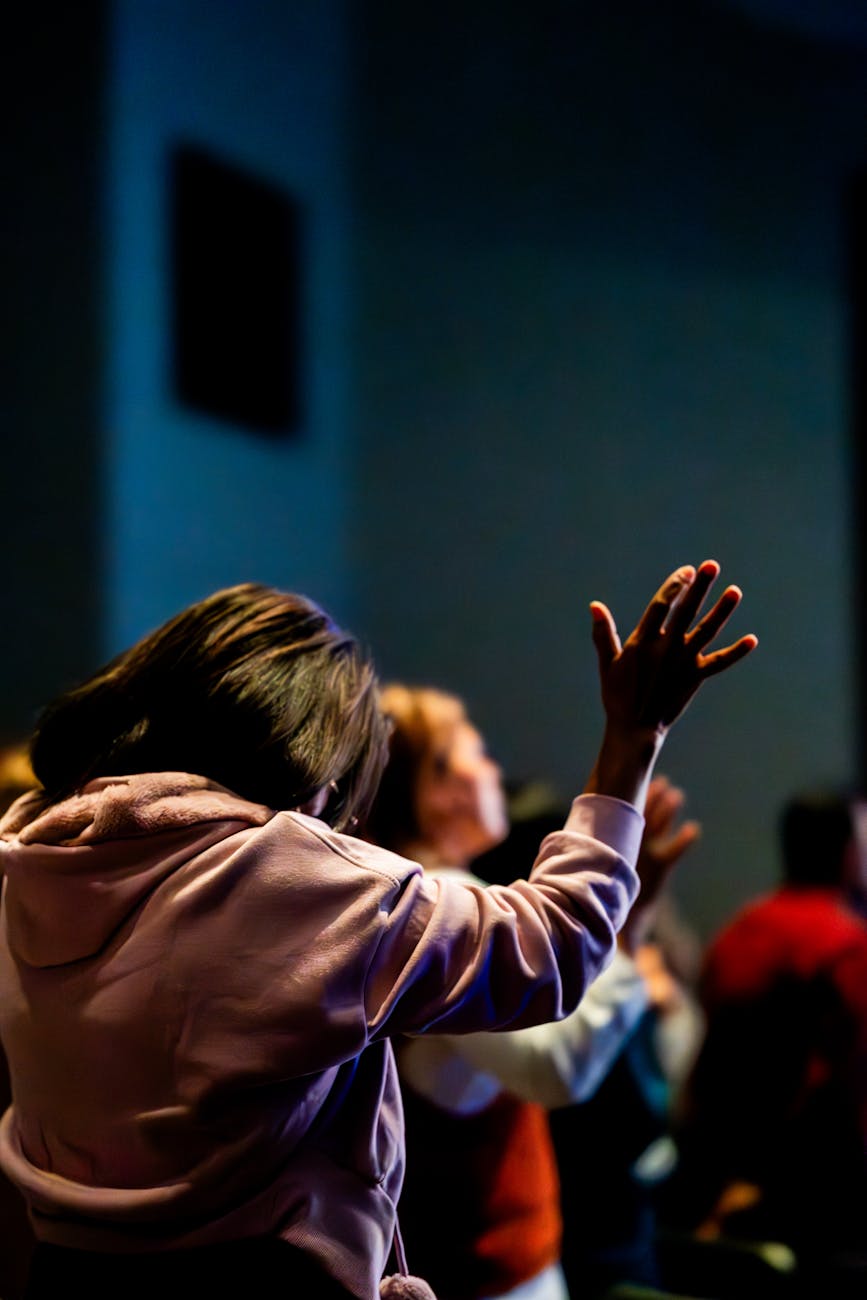
Our third (and final word for today) is yadah, which is to worship with uplifted hands. Yadah is our first reminder that worship is more than words; it is also posture. They say that the best and fullest communication happens face to face. That is when all the levels of communication are present: our words, tone, loudness, facial expressions, eye contact (or lack of it), and body language all combine to fully express what we have to say.
When we lift our hands in worship, we are opening ourselves to God. There is an aspect of a child reaching for a parent. There is a posture of receiving from the Lord. And there is an attitude of surrender in that simple act.
In our next article in this series, we’ll look at the other four words. Hopefully, you see that there is freedom of expression in worship, inviting us to use our words and our hands to praise and worship the Lord from the heart.
“Hallelujah! Praise God in his sanctuary. Praise him in his mighty expanse. Praise him for his powerful acts; praise him for his abundant greatness. Praise him with the blast of a trumpet; praise him with harp and lyre. Praise him with tambourine and dance; praise him with strings and flute. Praise him with resounding cymbals; praise him with clashing cymbals. Let everything that breathes praise the Lord. Hallelujah!” (Psalm 150, CSB)

- Essential Worship – A Worship Map - March 4, 2026
- Proverbs – Anxiety - March 2, 2026
- Essential Worship – Sprirt and Truth - February 25, 2026