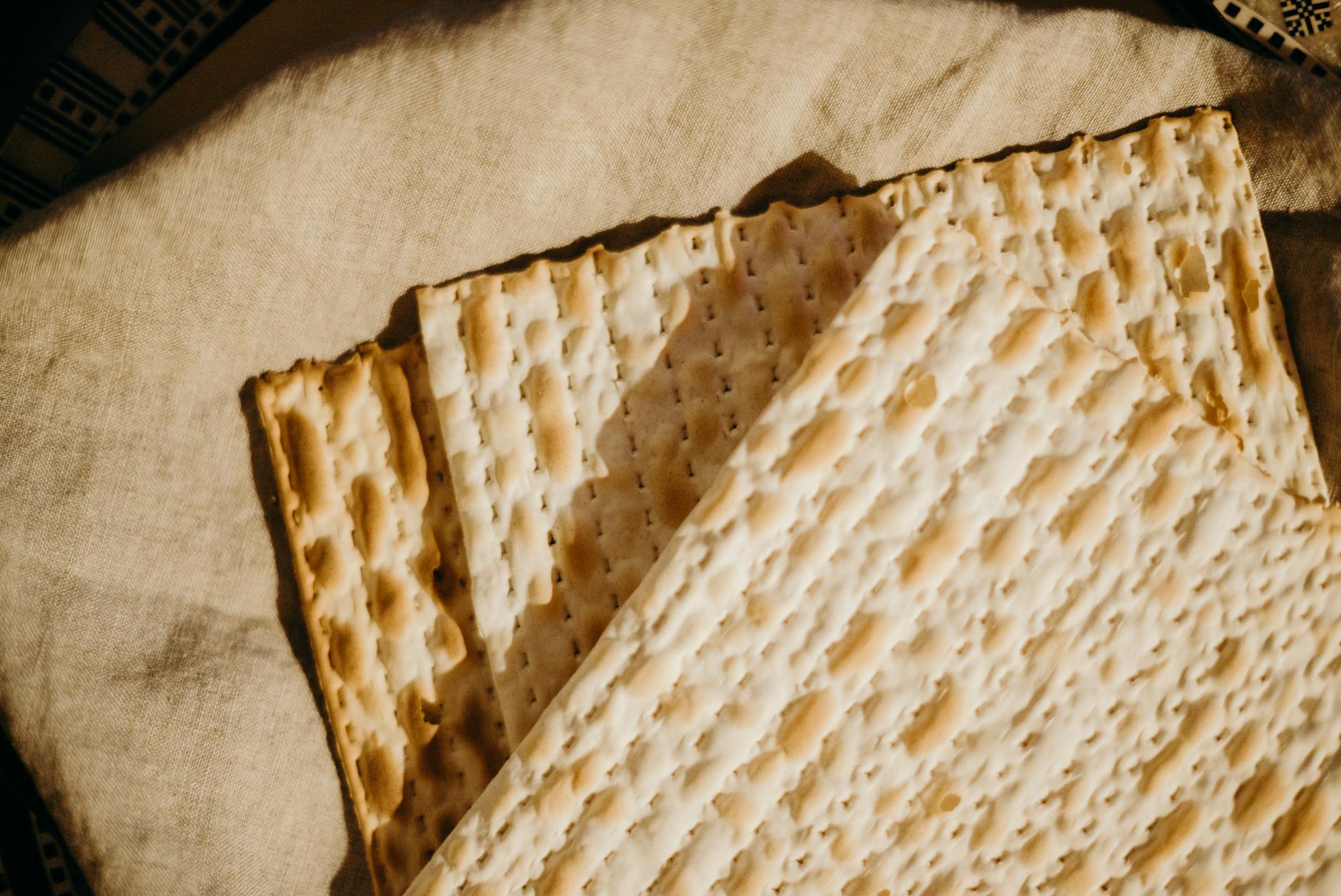
Every family has memories involving meals. Perhaps it was that one time when a new cook used salt instead of sugar. Or the way that grandma would never sit for the meal, but would serve everyone. And then there is the uncle who hates “pink stuff,” a cherry fluff salad. I’m not quite sure why. Remember when…
The purpose of the Passover meal is to remember and to pass on those memories to their children. Each part of the meal has a purpose and a story. All recounting in some way their slavery in Egypt and the miracle of their release. During Jesus’ Passover meal with His disciples, Jesus added something.
“As they were eating, he took bread, blessed and broke it, gave it to them, and said, “Take it; this is my body.” Then he took a cup, and after giving thanks, he gave it to them, and they all drank from it. He said to them, “This is my blood of the covenant, which is poured out for many. Truly I tell you, I will no longer drink of the fruit of the vine until that day when I drink it new in the kingdom of God.” After singing a hymn, they went out to the Mount of Olives.” (Mark 14:22–26, CSB)
Mark’s record of the meal is shorter than the other Gospels. Short and succinct. The elements were there. The bread represents Jesus’ body, the wine His blood. And then Jesus said something strange. “I will no longer drink of the fruit of the vine until that day when I drink it new in the kingdom of God.” We’ll pick that up again in a few weeks.
Lambchow reaches across the whole of Christ’s Kingdom. As such, I recognize the various views, attitudes, and divisions concerning the Lord’s Supper. I come at it from an evangelical/Anabaptist tradition with no disrespect for the other traditions or understandings.
The whole meal that evening was a time of remembrance. Luke’s account in Luke 22:19-20 echoes that meaning. Eat the bread in remembrance. (Paul, in 1 Corinthians 11:25, also connects the cup with remembrance.) Through partaking of the elements of the bread and cup, we are remembering His body that was broken for us and His blood that was spilled for us. Matthew’s record tells us that the blood of the covenant is poured out for the forgiveness of sins. (Matthew 26:27)
That moment of taking the bread and the cup is a remembrance and an application. We know the meaning, we recognize their purpose, we remember with thanksgiving, and apply it to the problems of today. It is meaningful when the church partakes together. And it is meaningful when we privately and prayerfully take the Lord’s Supper.
Paul warns us to approach the Lord’s Supper seriously. “So, then, whoever eats the bread or drinks the cup of the Lord in an unworthy manner will be guilty of sin against the body and blood of the Lord. Let a person examine himself; in this way let him eat the bread and drink from the cup. For whoever eats and drinks without recognizing the body, eats and drinks judgment on himself.” (1 Corinthians 11:27–29, CSB) We are all unworthy of Christ, so what does Paul mean? Boiling it down to the essence, treating the moment as an empty tradition, flippant in attitude, without the love and grace for one another. Without regard to the eternal consequences of God giving His only Son for us.
The Lord’s Supper (by whatever name your tradition calls it) is a time of reflection, remembrance, renewal, and rededication. It is not just something we do; it reminds us of who we are in Christ and what Christ has done, is doing, and will do for us.

- Essential Worship – A Worship Map - March 4, 2026
- Proverbs – Anxiety - March 2, 2026
- Essential Worship – Sprirt and Truth - February 25, 2026