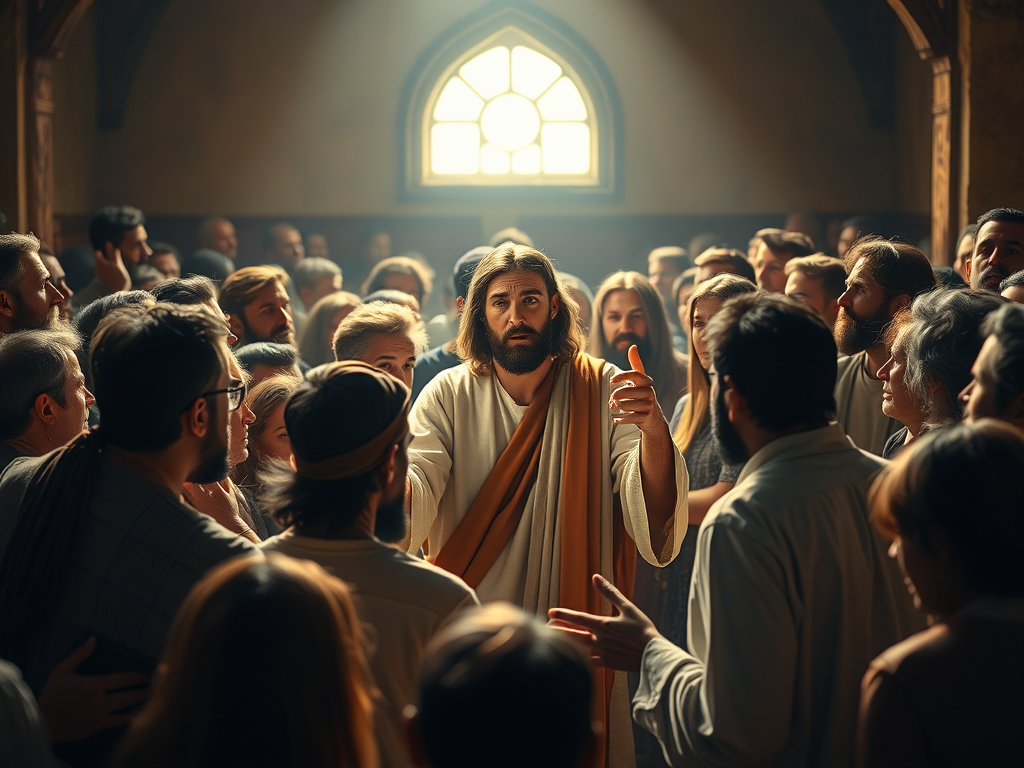
Midway through His ministry, Jesus returned to His hometown of Nazareth. News about the miracles and healings had no doubt made it home. We would expect that Jesus would get a hero’s welcome. But instead of embracing Jesus’ celebrity, they snubbed Him.
Mark records, “He left there and came to his hometown, and his disciples followed him. When the Sabbath came, he began to teach in the synagogue, and many who heard him were astonished. “Where did this man get these things?” they said. “What is this wisdom that has been given to him, and how are these miracles performed by his hands? Isn’t this the carpenter, the son of Mary, and the brother of James, Joses, Judas, and Simon? And aren’t his sisters here with us?” So they were offended by him. Jesus said to them, “A prophet is not without honor except in his hometown, among his relatives, and in his household.” He was not able to do a miracle there, except that he laid his hands on a few sick people and healed them. And he was amazed at their unbelief. He was going around the villages teaching.” (Mark 6:1–6, CSB)
Their response is directly tied to Mark’s purpose for writing his Gospel, which is to declare that Jesus is the Son of God. The folks of Nazareth and Jesus’ family heard His wisdom when He taught in the synagogue. They knew about the miracles. But they couldn’t get over seeing Jesus as that kid who grew up in Nazareth. In a “who do you think you are” kind of way, the hometown folks were offended by Him. As a result, Jesus could not perform a miracle and only healed a few people there.
That’s actually an amazing thing. Unbelief blocked, blunted, and quenched Jesus’ ability. It’s not that the townfolk wouldn’t welcome a miracle; they just couldn’t see Jesus for who He really was. Jesus marveled at their unbelief. But we need to be careful here. Jesus didn’t lose His ability; the people wouldn’t recieve it from His hand.
Jesus doesn’t force anything on anyone. Even the greatest miracle of all, our salvation and forgiveness before God for our sins, must be received with faith. Likewise, perhaps we don’t see more miracles because we aren’t willing in some way to receive. That unwillingness could be doubt that miracles happen, doubt that Jesus cares about us, feelings of unworthiness, or plain old self-reliance.
The other part of this picture, however, is God’s sovereignty. Just because we’re willing to receive doesn’t mean we can force God’s hand into anything. We must trust God, whether His answer is yes, no, or wait. And in that trust, that faith and hope, we must be willing to receive whatever God has for us.
Sometimes, like the people of Nazareth, we are blind to God’s hand in our world. There really are miracles and answered prayers all around us. It’s just that sometimes God’s answer is different from our expectations, so we are blind to it. Lord, give us eyes to see and ears to hear all that your hand provides.

- Essential Worship – A Worship Map - March 4, 2026
- Proverbs – Anxiety - March 2, 2026
- Essential Worship – Sprirt and Truth - February 25, 2026